

The DRIVE-In project aims to provide cutting-edge training to young researchers in the emerging field of integrated photonics, fostering its application in the automotive industry through the development of novel generic Indium-Phosphide (InP) Process Design Kits (PDKs) as well as the creation of disruptive simulation tools and modelling procedures for use in optoelectronic (combined integrated photonics and microelectronics) systems. Together the ESRs will combine academic research and industrial knowledge to overcome specific challenges of the integrated photonics sector, related to hybridisation of integrated photonics and microelectronics, increasing Photonic Integrated Circuit (PIC) complexity, availability of PIC design tools, need for high-performance Free Space Optic (FSO) devices and need for software simulation and fast-generation layout models. DRIVE-In is implemented through secondments of the ESRs between both the academic and industrial participants.


Working Packages
Development of compact models and simulation methods for hybrid photonic/electronic systems
This WP will focus on the generation of compact models of components for ADAS and safety applications for large-scale fabrication in InP foundries. It will start with a complete and detailed plan and workflow to develop new compact models of the building blocks used in InP generic integration platform following autonomous driving standards.
These compact models are fundamental for the basic BBs, which will be used for quality control of the fabrication process and constitute the basis for the advanced solid-state LIDAR and FSO circuit simulations needed in ADAS. This WP will provide valuable data for the generation of new elements in the PDK associated to this fabrication process.
The challenge of this task is in development the model’s formalism, defining the list of parameters which have to be fed into the model, evaluation of the model, implementing it into simulation tools, as well as adapting it for hybrid systems of photonics/electronics.
Validation of the compact models and development of test structures
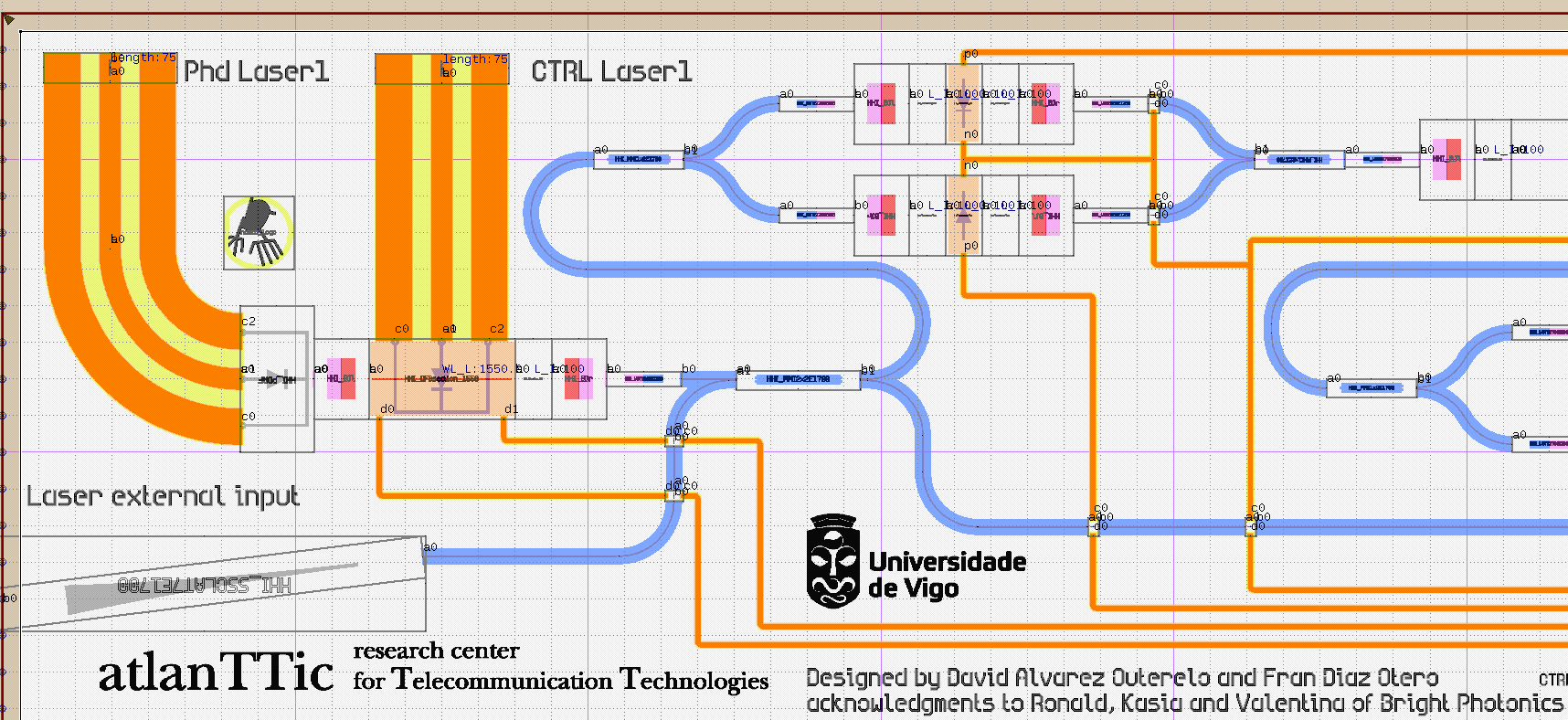
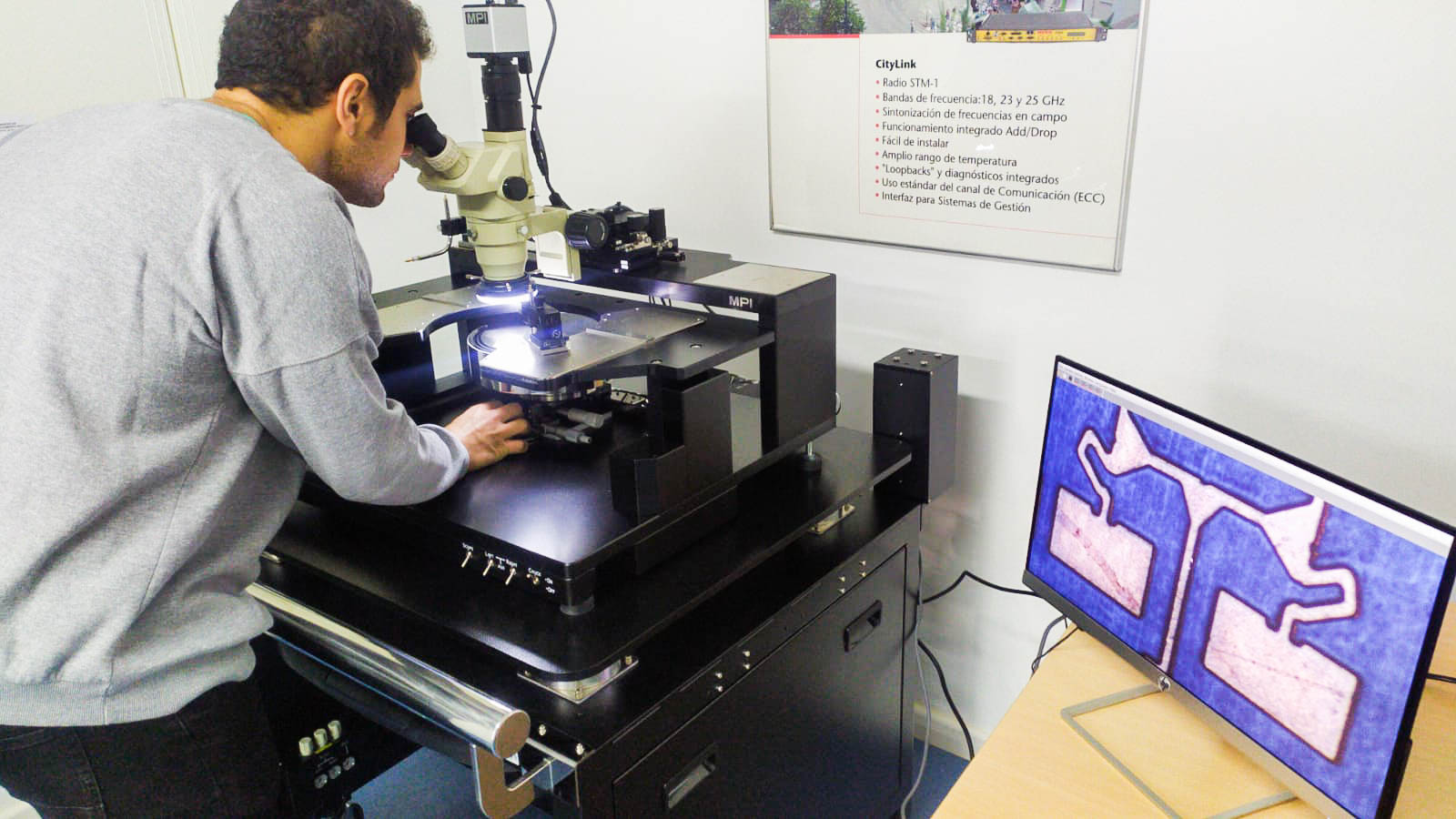
This WP will start with a complete and detailed plan and workflow for measurement and control manufacturing tasks in an integrated photonics InP foundry. It will be followed by the development of a dedicated design that will be used as a process control module.
An automatized system for control and measurement activities in the manufacturing chain will be developed (providing feedback to refine the proposed model to ESR1/WP2). Statistical models to study the performance of the fabricated BBs and the development of software simulation tools to define the automation process will be applied.
Development of a software tool for electronics/photonics simulation
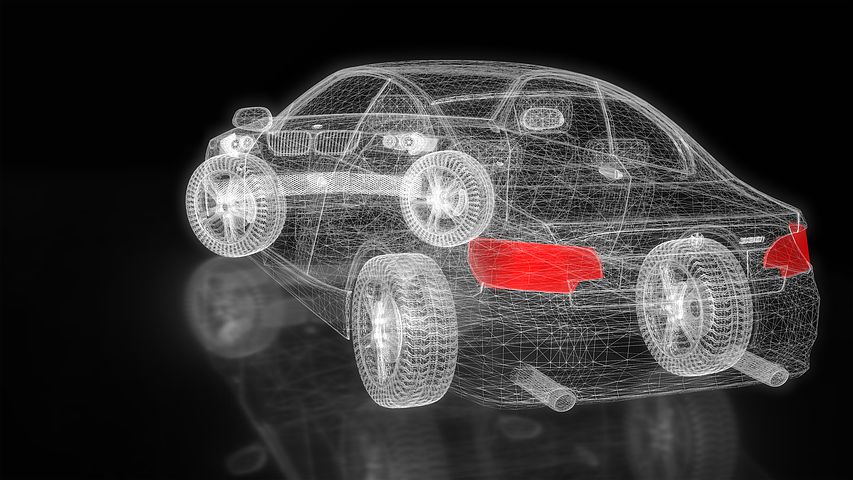
In this WP a new tool for co-simulation of microelectronics and photonics devices, subsystems and circuits will be elaborated. We will develop new techniques, methods and models to generate a software tool that enhances the classical EDA tool to include photonics simulations.
It will incorporate equations governing optical components directly into an electrical simulation framework, thus forming a single-engine optoelectronic simulation tool. Previously, the ability for a single software package to tightly model optical-electrical integration, thermal coupling, and various optical effects (such as interference, reflection, and multiple carrier frequencies) was non-existent.

Development of advanced PICs for testing applications in the automotive sector and in other relevant industrial sectors
The goal of this WP is to demonstrate improved performance of more advanced PICs in which the technologies developed in WP2 and 3 are used. To develop new, more complex ready-to-use application-oriented PICs, the compact models developed in WP2 and the technology maturity of WP2 and WP3 will be validated.
This next generation PICs will include not only LIDAR-oriented circuits and indoor line-of-sight communication systems, but also different devices suitable for telecom/datacom, metrology applications, aerial mapping and robotics such as: low linewidth laser, widely tuneable lasers, advanced transmitters, AMZI, gratings, AM and PM modulators.
University of Vigo
The University of Vigo, founded in 1990, is a public institution located in the autonomous area of Galicia in north western Spain. It prides itself to be a Galician, international-looking university.
Its premises are divided into three campuses. The Lagoas-Marcosende campus, which is 15 kilometers away from the city of Vigo, focuses on technology. The Lagoas campus in downtown Ourense centers on water research that produces social and economic value. The Pontevedra campus, also located in an urban setting, mixes arts, sports and humanities.
More than 24,000 students are registered at the three campuses, and 1,600 lecturers teach undergraduate and postgraduate programs at the University of Vigo. The degrees offered at the University of Vigo spread across science, technology, social sciences, law and humanities. However, the university is also considered one of the most technical universities in Galicia, with a particular focus on telecommunications, computer science, industrial engineering and environment engineering.
As an institution committed to international cooperation, the University of Vigo has signed more than 400 cooperation agreements with institutions of higher education in 38 different countries.

VPI PHOTONICS
VPIphotonics™ sets the industry standard for end-to-end photonic design automation comprising design, analysis and optimization of components, systems and networks.
VPI provides professional simulation software supporting requirements of active/passive integrated photonics and fiber optics applications, optical transmission system and network applications, as well as cost-optimized equipment configuration. A team of experts provides professional consulting services addressing customer-specific design, analysis and optimization requirements, and delivers training courses on adequate modeling techniques and advanced software capabilities.
VPIphotonics’ award-winning off-the-shelf and customized solutions are used extensively in research and development, and by product design and marketing teams at hundreds of corporations worldwide.
Over 160 academic institutions joined VPI´s University Program enabling students, educators and researchers an easy access to VPIphotonics’ latest modeling and design innovations.

Fraunhofer Institute for Telecommunications, Heinrich Hertz Institute, HHI.
Innovations for the digital society of the future are the focus of research and development work at the Fraunhofer Institute for Telecommunications, Heinrich Hertz Institute, HHI. In this area, Fraunhofer HHI is a world leader in the development for mobile and optical communication networks and systems as well as processing and coding of video signals.
Together with international partners from research and industry, Fraunhofer HHI works in the whole spectrum of digital infrastructure – from fundamental research to the development of prototypes and solutions. The institute participates in the standardization of information and communication technologies and creates new applications together with industrial partners.
One focus is optical wireless communication. It enables high-speed short-range links, especially in environments where particular demands are made in terms of electromagnetic compatibility and security.
The Fraunhofer HHI focuses on 10 to 100 Gbit transmission in the field of high-performance telecom components. In the area of mobile broadband systems, the Fraunhofer HHI concentrates its development activities on signal processing, wireless link and system optimization.
The Fraunhofer HHI’s developments of fiber optic measuring systems enable new and innovative laser und sensor concepts. They play an important role in the optimisation of energy efficiency and are a key factor for new and future-oriented markets.
Main research topics are additionally in the area of video- and audio-coding and transmission. The Fraunhofer HHI makes a significant contribution in the fields of greater efficiency in compression methods, autostereoscopic 3D displays and in the integration of real and virtual worlds for immersive multimedia applications.

Bright Photonics BV
BRIGHT Photonics is a design house for photonic integrated circuits (PICs). We make PIC technology accessible to businesses, research institutes and universities in the technologies SiO, InP, SiN, glass and polymers. We typically operate as intermediate company between foundry services and product developers. Design projects range from sub cells on multi project wafers to full wafer layout. On a one-to-one basis we help solving interfacing issues between optical components and electrical components as well as optimize designs for certain packaging solutions.
BP also may take care of prototyping for customers with our pack-aging partners. BP develops process design kits (PDK), either as a part of the foundries own PDK or as extensions to the foundries PDK. Extensions are aimed at needs of in-house design capability and MPW users. It provides foundry users with extended capabilities on the platform. As a service to photonic IC designers, commercial and research groups, we develop and license software extensions on the photonic design platforms of software partners (mask and circuit level tools).

CTAG
The Automotive Technology Centre of Galicia, CTAG, is an organisation created to offer advanced technological solutions to the automotive sector. It supports the automotive industry in its permanent quest for continuous improvement and new technology for products and manufacturing processes. Its highly qualified human resources provide excellent service and customer dedication.
CTAG’s modern facilities incorporate cutting-edge technology designed to provide world class service to the customer. CTAG is recognized as a Technology Centre by the Spanish Ministry of Economy and Competitiveness and has strategic alliances with other technology centres. It also participates in national and European associations such as STA, Ertico, Sernauto, etc.