

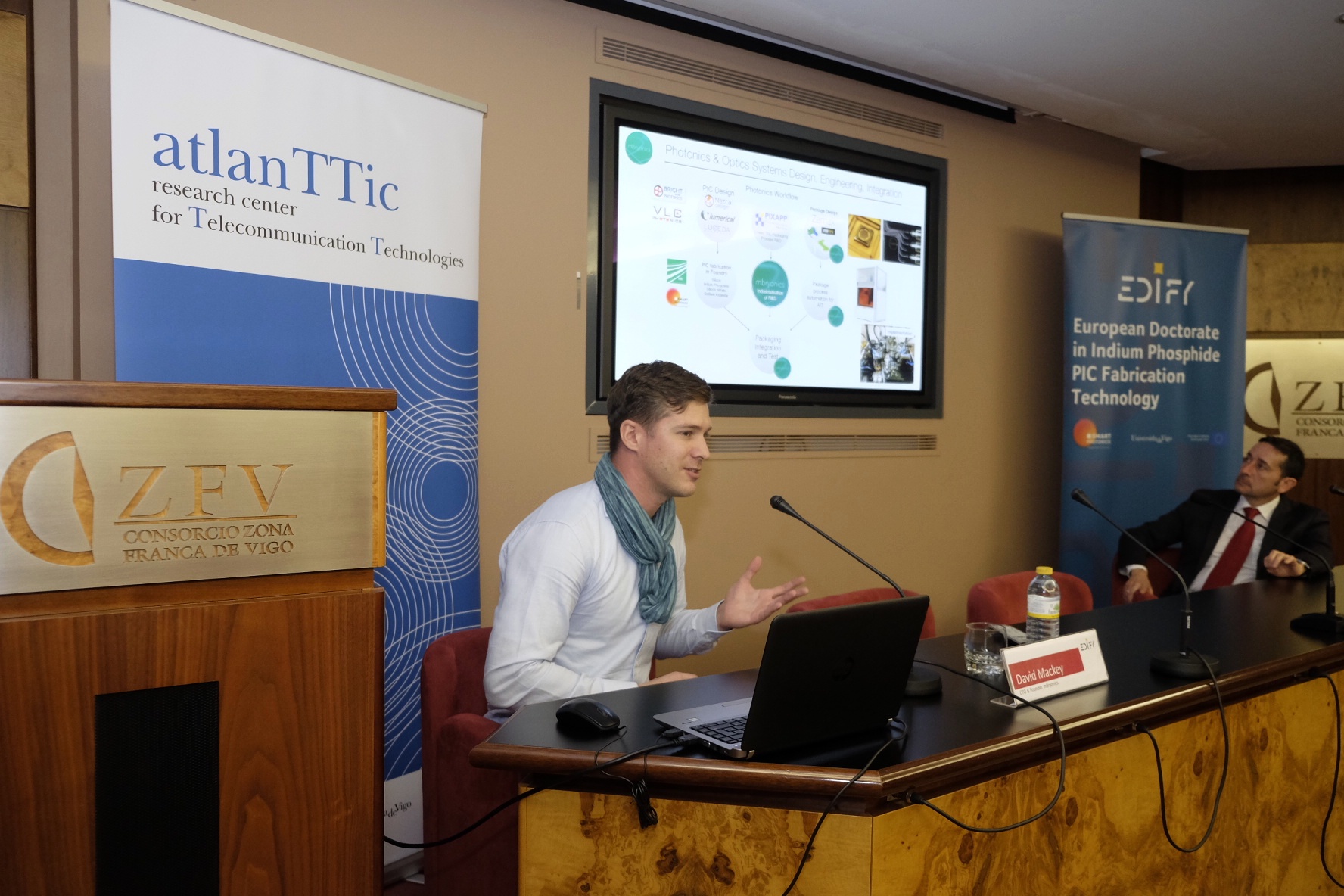
EDIFY has trained four ESRs at two world-leading European academic institutions – University of Vigo (Uvigo) and Technische Universiteit Eindhoven (Tue)- and four state of the art industrial companies SMART Photonics BV, Bright Photonics, Photon Design and Phoenix BV -covering the value chain, from research and design to manufacturing, thereby forming a strong interdisciplinary network between technical sciences an industry to overcome specific barriers in the integrated photonics sector. The progamme provided a coherent training platform that addressed the outstanding engineering challenges of the new field of Integrated Photonics while nurturing technical, creative and entrepreneurial skills. The outcomes are a breakthough improvement in performance, power consumption and predictive methodologies for photonic Integrated Circuits and a cohort of ESRs trained on cutting-edge photonic integration and nanofabrication technology.




Working Packages
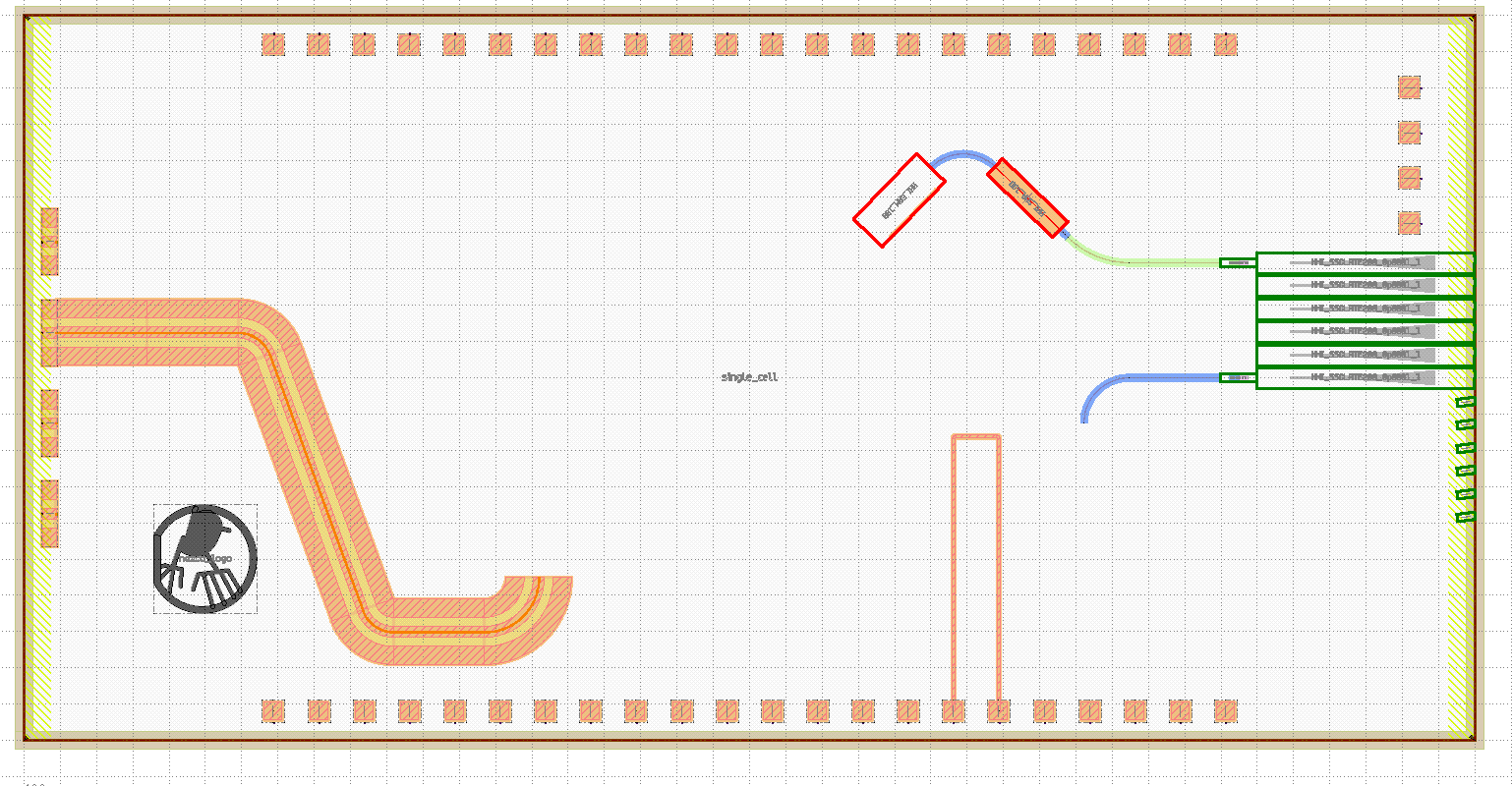
Development of compact models for integrated photonics´ InP fabrication
This WP will focus on the generation of compact models for large-scale fabrication in InP foundries. It will start with a complete and detailed plan and workflow for measurement and control manufacturing tasks in an integrated photonics foundry. Followed by the development of a dedicated design that will be used as a process control module. An automatized system for control and measurement activities in the manufacturing chain will be developed. This system will also provide feedback to refine the proposed model. Participating ESRs will work with scientific participants to apply statistical models to study the performance of the fabricated building blocks and the development of software simulation tools to define the automation process.
Development of low loss waveguides
This WP will focus on the generation of low-loss waveguides for InP integrated photonics ASPICs. After elaborating a complete test plan, in a study of the impact of diffusion of Zn on the active building blocks will be accomplished. This will be achieved by simulation followed by fabrication process development, including performance and monitoring. It will be followed by measurements of the final performance of the devices fabricated. Several fabrication runs are planned to calibrate the process and to optimize the performance of booth active (lasers, amplifier, modulators) and passive (splitters, filters, interferometers) the building blocks. Participating ESRs will work with scientific participants to apply theoretical models, develop new tools, new building blocks and software simulations for this new generation of waveguides with small losses. They will provide valuable data to obtain compact models (WP2) for the generation of the new PDK associated to this fabrication process.
Development of Aluminium containing quantum Wells
This WP will focus on the generation of Aluminium containing quantum wells for active devices in InP integrated photonics ASPICs. After elaborating a complete test plan, there will be a characterization of the interfaces between InGaAsP and AlInGaAs materials, followed by a careful study of the oxidation/passivation of the quantum wells and a complete survey of the results and performance of the building blocks. Participating ESRs will work with scientific participants to apply theoretical models, develop new building blocks, test structures and software simulations for this new generation of devices with Al containing quantum wells. They will provide valuable data to obtain compact models (WP2) and compare the results and modelling obtained with the phosphorus containing quantum wells that were generated from WP2.
Development of application oriented PICs
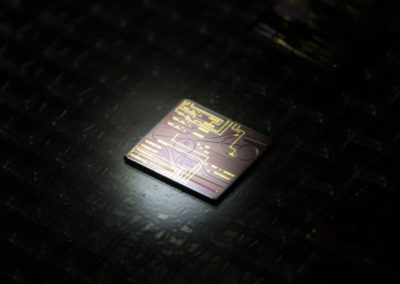
The goal of the WP is to demonstrate improved performance of more advanced PICs in which the technologies developed in WP3 and 4 are used. To develop new, more complex ready to use application-oriented PICs, the compact models developed in WP1 and the technology maturity of WP3 and WP4 will be validated. This next generation PICs will include sensing oriented circuits such as: low linewidth laser, widely tuneable laser, low repetition mode-locked laser; telecom oriented: advanced transmitters which contains Al QWs laser and modulators: datacom oriented: transmitter operating in O-
University of Vigo
The University of Vigo, founded in 1990, is a public institution located in the autonomous area of Galicia in north western Spain. It prides itself to be a Galician, international-looking university.
Its premises are divided into three campuses. The Lagoas-Marcosende campus, which is 15 kilometers away from the city of Vigo, focuses on technology. The Lagoas campus in downtown Ourense centers on water research that produces social and economic value. The Pontevedra campus, also located in an urban setting, mixes arts, sports and humanities.
More than 24,000 students are registered at the three campuses, and 1,600 lecturers teach undergraduate and postgraduate programs at the University of Vigo. The degrees offered at the University of Vigo spread across science, technology, social sciences, law and humanities. However, the university is also considered one of the most technical universities in Galicia, with a particular focus on telecommunications, computer science, industrial engineering and environment engineering.
As an institution committed to international cooperation, the University of Vigo has signed more than 400 cooperation agreements with institutions of higher education in 38 different countries.
The University of Vigo is the only Spanish higher education institution to have sent two micro-satellites into space. It publishes the interdisciplinary journal of marine studies Thalassas.

Smart Photonics
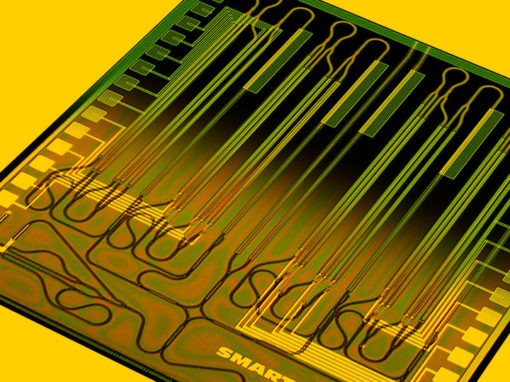
SMART Photonics, located in Eindhoven, The Netherlands, is a foundry offering production services for mainly Indium Phosphide based photonic components. SMART Photonics is an independent pure-play foundry, using the knowledge, experience and equipment to produce photonic components for our customers, based on their designs.
SMART offers the complete production process from epitaxial growth and re-growth, processing, polishing and dicing of wafers into chips. Supports our customers from the proof of concept phase up to and including full production. As a foundry, we also offer single or combined process steps to complete or being a back-up for the production processes of customers.
Indium phosphide chips are proving to be the best choice in many applications, ranging from next generation low-power consumption data-centers to a variety of sensing applications for structural monitoring and medical diagnostics. Integrated photonics also plays an increasingly important role in the aircraft industry, air quality monitoring, autonomous driving and in ultra-secure cryptography.
SMART Photonics works with highly skilled, experienced and innovative professionals, eager to work on new and exciting integration technologies.

Technische Universiteit Eindhoven
Eindhoven University of Technology (TU/e) is a research-driven and design-oriented technical university, which mainly aims at educate young people at an academic level in the domain “engineering, science and technology”. On the whole TU/e employs 220 scientific staff members and provide education to 10000 undergraduate students and 1300 PhD students.
TU/e participates in the main european projects related to photonic integration technologies such as: EuroPIC, Paradigm,. All these projects were concerned with the development of photonic circuit new fabrication technologies and training networks– which are also the primary goal of this project. As well as other like TDK4Pe (EU: FP7), Satrax (NL: Point-One), EuroPIC (EU: FP7), Memphis (NL: Smart-Mix), Helios (EU: FP7), Pythia (EU: FP7).

Phoenix Software BV
PhoeniX Software is a high-tech Company, part of Synopsys Corp, head-quartered in Enschede (the Netherlands) developing, supplying and supporting world class software solutions for micro and nano technology corporations and institutes. Founded in 2003, PhoeniX Software supports organizations to improve quality, reduce time to market and enhance research by offering unique and highly integrated software solutions, training and customer support. Every single member of the PhoeniX Software team is dedicated and driven to create innovative software solutions based on customer needs and expectations.

Photon Design
Photon Design was started in 1992 and now provides a wide range of innovative photonics CAD tools to 35+ countries around the world, supplying most of the World’s leading photonics companies, universities and government research labs. CAD products include tools for both passive and active (semiconductor) component and optical circuit modelling.
Bright Photonics BV
BRIGHT Photonics is a design house for photonic integrated circuits (PICs). We make PIC technology accessible to businesses, research institutes and universities in the technologies SiO, InP, SiN, glass and polymers. We typically operate as intermediate company between foundry services and product developers. Design projects range from sub cells on multi project wafers to full wafer layout. On a one-to-one basis we help solving interfacing issues between optical components and electrical components as well as optimize designs for certain packaging solutions. BP also may take care of prototyping for customers with our pack-aging partners. BP develops process design kits (PDK), either as a part of the foundries own PDK or as extensions to the foundries PDK. Extensions are aimed at needs of in-house design capability and MPW users. It provides foundry users with extended capabilities on the platform. As a service to photonic IC designers, commercial and research groups, we develop and license software extensions on the photonic design platforms of software partners (mask and circuit level tools).